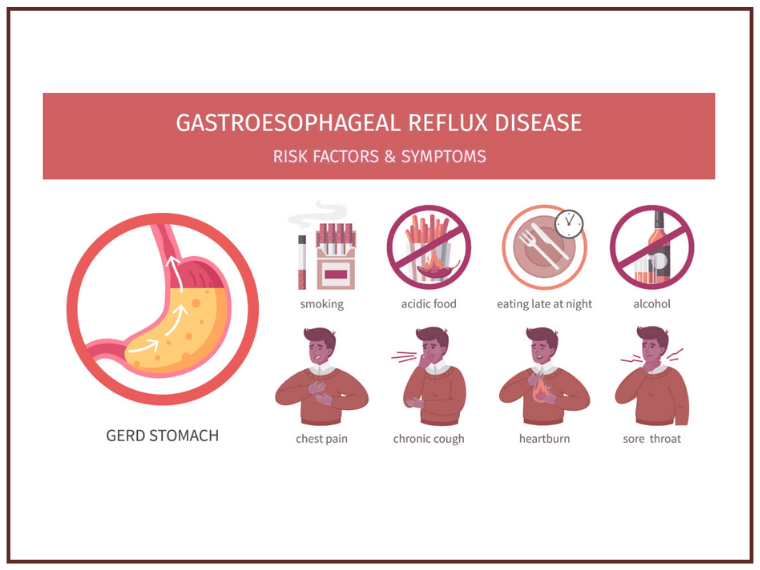
What is GERD?
Gastro-esophageal Reflux Disease (GERD) is a chronic digestive condition where stomach acid or bile irritates the food pipe (esophagus). It occurs when the lower esophageal sphincter (LES)-a ring of muscle at the bottom of the esophagus-relaxes inappropriately or weakens, allowing stomach contents to flow back into the esophagus. This backward flow is called acid reflux.
While occasional acid reflux is common, GERD is diagnosed when reflux occurs frequently (more than twice a week) and causes significant discomfort or damage to the esophagus.
Symptoms of GERD
The symptoms of GERD can vary in severity and may include:
- Heartburn: A burning sensation in the chest, usually after eating, that may worsen at night or when lying down.
- Regurgitation: Sour or bitter-tasting acid backing up into your throat or mouth.
- Difficulty swallowing (dysphagia): Feeling like food is stuck in your throat.
- Chest pain: In some cases, GERD can cause discomfort that feels similar to a heart attack.
- Chronic cough: Especially at night or after eating.
- Sore throat or hoarseness: Due to acid irritating the vocal cords.
- Asthma-like symptoms: Wheezing or shortness of breath triggered by acid reflux.
- Nausea: Particularly after meals or when lying down.
If these symptoms persist or worsen, it’s important to seek medical advice, as untreated GERD can lead to serious complications.
Causes and Risk Factors of GERD
Several factors can contribute to the development of GERD, including:
- Weak or Relaxed Lower Esophageal Sphincter (LES): The LES acts as a valve between the stomach and the esophagus. When it fails to close properly, stomach acid can flow back into the esophagus.
- Hiatal Hernia: A condition where a part of the stomach bulges through the diaphragm into the chest cavity, increasing the risk of reflux.
- Obesity: Excess weight puts pressure on the abdomen, which can force stomach contents into the esophagus.
- Pregnancy: Hormonal changes and pressure on the abdomen from the growing uterus can trigger GERD.
- Smoking: Smoking weakens the LES and impairs the esophagus ability to clear acid.
- Alcohol and Certain Foods: Foods such as citrus, spicy foods, chocolate, and fried or fatty foods, as well as alcohol, can trigger reflux.
- Medications: Certain medications, including anti-inflammatory drugs (NSAIDs), calcium channel blockers, and sedatives, can relax the LES and contribute to GERD.