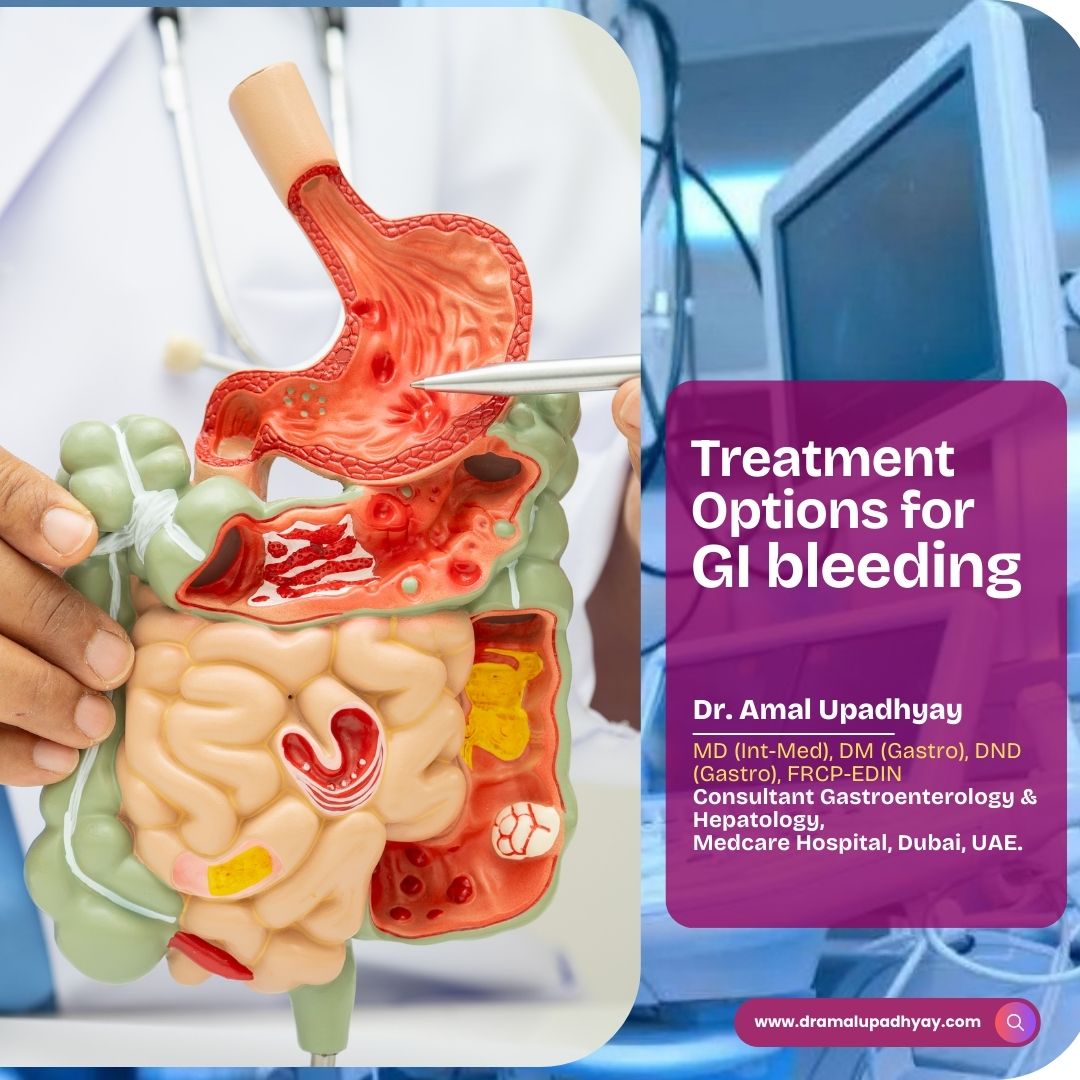
Treatment Options for GI Bleeding
The treatment of GI bleeding focuses on stabilizing the patient, identifying the source of the bleeding, and stopping the bleeding effectively. Depending on the severity and underlying cause, treatment may include medical management, endoscopic procedures, interventional radiology, or surgery.
Dr. Amal Premchandra Upadhyay, an expert Consultant in Gastroenterology and Hepatology at Medcare Hospital Dubai, specializes in diagnosing and treating GI bleeding using advanced, evidence-based techniques.
1. Initial Stabilization
The first priority in treating GI bleeding is to stabilize the patient:
- Intravenous Fluids (IV): To replace lost blood volume and maintain blood pressure.
- Blood Transfusions: Required in cases of significant blood loss or anemia.
- Medications: Proton pump inhibitors (PPIs) are commonly used in upper GI bleeding—especially for peptic ulcers and gastritis—to reduce stomach acid and promote healing.
Under the care of Dr. Amal Upadhyay, patients receive prompt stabilization and tailored medical therapy based on the source of bleeding.
2. Endoscopic Treatment
Once stabilized, endoscopy is performed for diagnosis and treatment:
- Endoscopic Hemostasis: If bleeding is identified during endoscopy—such as ulcers, polyps, or varices—various techniques are used:
- Injection Therapy (epinephrine or sclerosing agents)
- Thermal Coagulation
- Hemoclips or Banding
Dr. Amal Upadhyay is highly skilled in advanced endoscopic procedures, offering precise and effective bleeding control to prevent further complications.
3. Medications
Depending on the cause of bleeding, medications may include:
- Proton Pump Inhibitors (PPIs): Reduce stomach acid and heal ulcers.
- Antibiotics: Used when bleeding is linked to infections or cirrhosis to prevent further complications.
- Vasopressors (e.g., octreotide): Used for esophageal varices or portal hypertension to reduce blood flow and control bleeding.
Dr. Amal Upadhyay provides personalized medication plans based on the underlying diagnosis.
4. Interventional Radiology
When endoscopic treatment is not successful:
- Angiography and Embolization: A catheter is guided to the bleeding vessel, and embolizing agents (such as coils or glue) are used to stop the bleeding.
Patients managed by Dr. Amal Upadhyay receive coordinated care with interventional radiology when needed.
5. Surgical Treatment
Surgery may be required if bleeding cannot be controlled through other measures:
- Surgical Repair of Ulcers or Diverticulosis
- Colectomy for severe bleeding conditions such as colorectal cancer or diverticular disease
Dr. Amal Upadhyay ensures patients receive timely surgical referrals when necessary and continues overseeing their GI care.
6. Treatment for Specific Conditions
- Esophageal Varices: Managed using medications (e.g., beta-blockers), endoscopic banding, or sclerotherapy. In severe cases, a TIPS procedure may be required.
- Hemorrhoids: Managed through dietary advice, topical medications, endoscopic ligation, or surgery for advanced cases.